Thinkers, Doers, and
the Myth of Feeling Ready
My partner bought a secondhand kayak on a Wednesday and was capsizing joyfully by Saturday. I was still reading the Coast Guard's guidelines on cold-water immersion — for a boat I did not yet own, want, or need. A field guide to the oldest argument in the human mind. Brace yourself: science has thoughts about both of us.
Where this essay is taking you — because you are, statistically, the kind of reader who needs the itinerary before agreeing to the trip. No judgment. This is a safe, mildly ironic space.
- 00 The Twentieth Tab
- 01 Two Ways of Meeting the Unknown
- 02 The Cartographer's Temptation
- 03 What the Doer Knows the Map Can't Teach
- 04 The Myth of Feeling Ready
- 05 A Brief History of Choosing a Side
- 06 The Trap Each One Sets for Itself
- 07 Reading the Terrain Together
- ☕ Coffee Corner
- 08 The Field Note You Carry Home
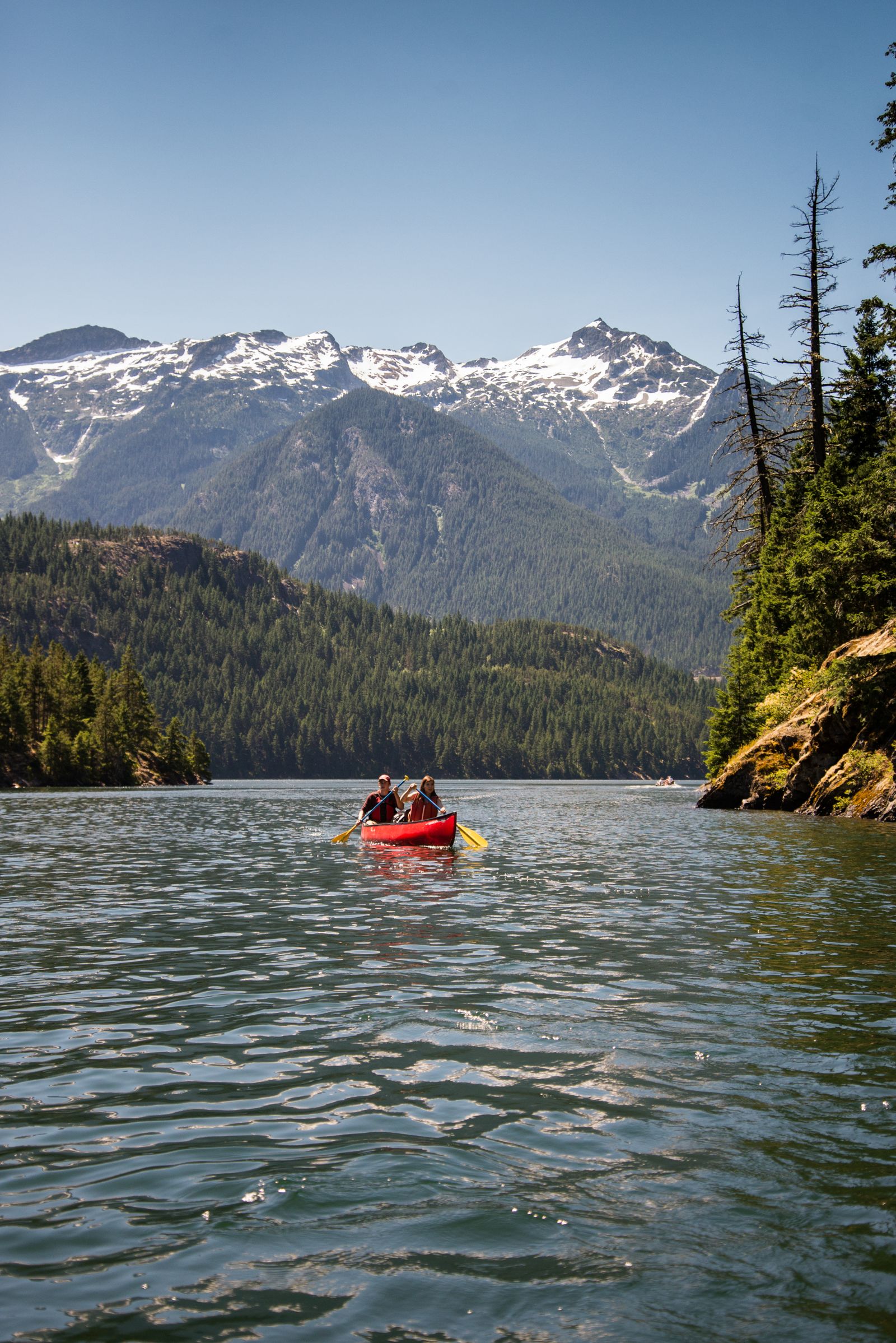
On a Wednesday evening, my partner announced they were buying a kayak. By Wednesday night, they had bought it — a dented, faintly mysterious vessel from a stranger forty minutes away, paid for before I'd finished the sentence "maybe we should look into this a little more." By Saturday morning they were on the river, sunburned, thrilled, and rolling the thing back upright using a technique they had watched exactly once and appeared to absorb through sheer force of vibes.
I, meanwhile, was on my nineteenth browser tab. Kayak stability ratings. A forum thread titled "sit-on-top vs. sit-in: a forty-comment blood feud." A video comparing hull materials, watched at 1.5x speed, notes taken, for a boat I did not yet own and had not technically agreed to want.
By tab twenty — a PDF from the U.S. Coast Guard on cold-water immersion, because somewhere around tab fifteen my research had quietly promoted itself from "preparation" to "risk assessment" to, if we're honest, "documentation I might need to submit later" — my partner texted a photo from the middle of the river. Grinning. Slightly capsized. Entirely, infuriatingly fine.
This is not a story about who was right. Everything is fine. It has always been fine. My partner has also driven us four hours in the confidently wrong direction and once agreed to a "quick" kitchen renovation that left us eating cereal off a card table for three months. I have also, on separate and equally unglamorous occasions, thought about a decision so thoroughly that the decision quietly closed itself while I was still weighing option four. We are, respectively, catastrophically good at two different things — and this essay exists because I finally looked up the science instead of just resenting it personally.
Two Ways of Meeting the Unknown
Let's call them, for the length of this essay, the Mapmaker and the Explorer — mostly because "procrastinator versus person who has never once suffered a visible consequence" felt unfair to put in print, even though it is, some days, extremely accurate.
The Mapmaker wants the terrain fully understood before a single step is taken — every route considered, every hazard flagged, every version of the trip pre-lived in the imagination, ideally with footnotes. The Explorer wants to be standing in the terrain, because that's the only place the terrain has ever agreed to explain itself. Neither is wrong about what they need. They are simply answering the same question — how do I not get hurt — with two completely different survival strategies, both of which have worked often enough to become a personality.
This essay is not about ADHD, and it is not about procrastination — real, specific, well-researched things that deserve better than being flattened into a personality quiz. What we're describing is closer to a dial most people sit somewhere along, one that slides depending on the day, the stakes, and how recently reality has embarrassed you. You can be a devoted Mapmaker about your taxes and a full Explorer about your haircut. Most people are both, often within the same hour, without ever noticing the whiplash.
Both instincts, it turns out, are trying to do the exact same job: avoid a bad outcome. They've just concluded, from very different premises and with equal conviction, that the safest place to stand is either fully outside the water or fully in it. Everything else in this essay is just the two of them arguing about the details.
The Cartographer's Temptation
Here's the part of Mapmaking nobody puts on the recruitment poster: at some point, more research quietly stops being preparation and starts being an extremely convincing cosplay of preparation. It even comes with its own props. Tabs. So many tabs.
Psychologists studying anxiety have spent three decades circling a construct called intolerance of uncertainty — a clinical way of saying "how much does not-knowing wreck you, specifically." Within it, researchers found two distinct flavors, and the difference between them is, frankly, a little rude.
Wanting to know what's coming. Shows up as planning, checking, and an above-average number of calendar reminders. Uncomfortable. Not, on its own, load-bearing.1
Freezing at the exact moment action is required, specifically because the outcome refuses to be guaranteed in advance. This is the one quietly keeping your tabs open. Rude, as previously noted.1
Researchers Bredemeier and Berenbaum found that the uncertainty-paralysis kind of freeze wasn't calibrated to real risk at all — it was calibrated to how bad the story in your head sounded.1 Which is, technically, peer-reviewed evidence for something every person with a group chat already suspected: your brain does not actually do math. It does vibes, wearing a math costume.
Later research confirms this holds up outside the lab too, where the highest scorers on uncertainty intolerance struggled visibly more with ordinary, low-stakes daily choices2 — which is a very polite, very peer-reviewed way of saying some of us have had a genuine internal debate about lunch.
This is the Mapmaker's actual condition, most of the time: not "I don't have enough information," but "no amount of information will ever make this outcome guaranteed, and I would like it to be guaranteed before I proceed, please and thank you." A reasonable request. Structurally impossible. Certainty about the future is not a resource you can research your way into — it isn't sold anywhere, it doesn't ship, and it is definitely not hiding in tab twenty-five.
What the Doer Knows the Map Can't Teach
Meanwhile, on the river, my partner was learning something no laptop has ever successfully taught anyone: what it actually feels like when a kayak starts to tip. Not the theory of it. The weight of it. The half-second of choice inside it. The specific hip movement no forum comment has ever once correctly transmitted through a screen — condolences to everyone who's tried.
Psychologist David Kolb spent his career formalizing something every toddler already knows and no productivity app has caught up to: real learning runs in a loop, and the loop has to physically touch the world at least twice per lap. His model has four stations — and, this is the detail Mapmakers love to quietly skip — reflection is one of them. Kolb never said doing beats thinking. He said thinking without doing gets stuck exactly where you'd expect: circling the same idea forever, with nothing new to argue with it.3
The loop works starting from any point — that's the whole trick. The Mapmaker tends to make camp at E and S. The Explorer starts at N and W and circles back to reflect later, sometimes much later, sometimes suspiciously never. The only real failure mode is a loop that never closes. Everything else is just personality.
The Myth of Feeling Ready
Somewhere in this essay's research folder — deep in the tabs, may they rest — is a term borrowed from decision science: the explore-exploit tradeoff. It describes an unglamorous but extremely relatable problem: how a decision-maker, human or otherwise, should split effort between trying something new (exploring) and sticking with the thing already known to work (exploiting).4
It shows up everywhere once you're looking: a bird deciding whether to keep foraging at a reliable bush or risk the unfamiliar tree that might have more berries. You, deciding whether to keep researching kayaks — a decision that has, at this point, technically outlasted several actual kayaking seasons.
Exploration is, mathematically, defined by the fact that you do not yet have the information that would tell you it's a good idea. That's not a design flaw. That is the entire category working exactly as intended. Waiting to "feel ready" to explore is like waiting for an unopened door to politely describe what's behind it. It won't. That information is rude like that — it only exists on the other side.
"Readiness" isn't a state you arrive at before acting. It's a story you get to tell afterward, about the version of yourself that turned out to have had enough all along. Nobody has ever felt ready in advance for something genuinely new. They've only ever felt ready in the retelling — usually at a dinner party, usually with a drink in hand, usually leaving out the part where they Googled "is my kayak going to kill me" at 1 a.m.
A Brief History of Choosing a Side
This isn't a new argument. Humans have been staging some version of it for roughly 2,400 years, in considerably better robes, with considerably worse group chats.
What's easy to miss in the modern rerun of this argument is that the original Greek version was never a binary to begin with. Phronesis — practical wisdom — was explicitly defined as judgment earned through experience and refined through reflection. Not fast. Not slow. Both, running through each other, on a loop, for a very long time, entirely without the help of a productivity app.
The Trap Each One Sets for Itself
In the interest of fairness — and because unHINGED does not, as a matter of editorial policy, let anyone leave this article feeling smug — here is the honest, occasionally unflattering inventory of what each mode is genuinely good at, and where it reliably goes off the rails.
Notice that last row. Under real pressure, both modes reliably intensify their own worst habit rather than borrow the other one's strength. The Mapmaker researches harder. The Explorer moves faster. By that point, neither response is really about the decision anymore — both are just two different, well-dressed ways of managing the discomfort of not knowing.
Reading the Terrain Together
So what actually works? Not "balance" — the kind of advice that sounds true, means nothing, and has never once helped anyone buy a kayak. What works, across fields that have genuinely had to solve this under pressure, is a much smaller and stranger idea: shrink the loop.
Fighter pilot and strategist John Boyd built a decision framework for exactly this problem, now borrowed by everyone from emergency-room doctors to product managers: Observe, Orient, Decide, Act — then observe again, immediately, based on what the action just revealed. Startup culture reinvented the same shape decades later and called it build-measure-learn, presumably because "do a small thing and see what happens" didn't fit on a slide. Scientists have been running an older version of it for four centuries. They call it, simply, the method — no rebrand required.
Path one: months of research, one enormous decision, zero course-correction until something breaks in public. Path two: a small, cheap, reversible step — taken on purpose, quickly — followed by a short, honest look at what happened, followed by another small step. The second path uses exactly as much thinking as the first. It just refuses to spend all of it before mile one.
It's just a very detailed, beautifully footnoted description of the house.

A short list of things that have genuinely helped bridge the gap between thinking and doing — in this house, and in several others we asked.
The Field Note You Carry Home
Here's what I did, eventually, about the kayak: I closed the tabs. Not from some hard-won epiphany — mostly because my partner sent a second photo, this one of the sunset from the water, captioned "you're missing this," and something about being technically correct about the risk assessment stopped feeling like winning.
I bought a kayak two weeks later. Not the one with the best hull-material rating, which does not, it turns out, meaningfully exist as a deciding factor for a beginner on a calm river — a fact I could have learned in tab two instead of tab nineteen. The one that was available, reasonably priced, and sitting in a stranger's garage forty minutes away — which is to say, nearly the exact decision my partner made in one evening, except it took me two weeks, nineteen browser tabs, and one government PDF to arrive at the same place.
That's the part worth sitting with, once the joke wears off. The research wasn't wasted. It just should have been running alongside the doing, instead of standing guard in front of it with its arms crossed. The false choice was never "Mapmaker or Explorer." It was always going to be some working arrangement between the two — thought sharpening the next action, action correcting the last thought, the loop closing a little faster each time you actually let it.
You don't have to become a different kind of mind to get this right. You just have to stop waiting for the map to feel finished before your legs get involved. The map was never going to finish itself. It was waiting on you to go find the parts it couldn't draw from here — and yes, that's a metaphor, and yes, it's about the kayak, and also, unfortunately, about everything else.
Everything referenced above, plus a few doors we didn't have room to open in the essay itself.
- Thinking in Bets — Annie Duke. Decision-making under permanent uncertainty, from a professional poker player turned decision scientist.
- The Paradox of Choice — Barry Schwartz. Why more options often produce less satisfaction, and more stalling.
- The Human Condition — Hannah Arendt. The philosophical case history behind our modern split between thinking and doing.
- Experiential Learning — David A. Kolb. The academic source behind the learning loop diagrammed above.
- In Search of the Perfect Faith — on humanity's search for meaning, treated with the same mix of rigor and irreverence.
- Better One, or Two? — on the difference between recognizing a pattern in yourself and diagnosing one.
- A Arte de Não Fazer Nada Agora — the neuroscience of procrastination, for the days the freeze wins anyway.
- Search "intolerance of uncertainty scale" for the clinical assessment tools researchers actually use.
- Look up John Boyd's OODA loop if you work in a field with fast-changing conditions — it was built for exactly that.
- Aristotle's Nicomachean Ethics, Book VI, for phronesis in the original — dense, but the source of nearly everything written about practical wisdom since.
- Bredemeier, K., & Berenbaum, H. (2008). Intolerance of uncertainty and perceived threat. Behaviour Research and Therapy. The foundational study distinguishing "desire for predictability" from "uncertainty paralysis" as separate dimensions of intolerance of uncertainty.
- Birrell, J., Meares, K., Wilkinson, A., & Freeston, M. (2011). Toward a definition of intolerance of uncertainty: A review of factor analytical studies of the Intolerance of Uncertainty Scale. Clinical Psychology Review. Reviews how uncertainty intolerance shows up in everyday, non-clinical decision-making.
- Kolb, D. A. (1984). Experiential Learning: Experience as the Source of Learning and Development. Prentice-Hall. The source of the four-stage learning cycle diagrammed in Waypoint 03.
- Cohen, J. D., McClure, S. M., & Yu, A. J. (2007). Should I stay or should I go? How the human brain manages the trade-off between exploitation and exploration. Philosophical Transactions of the Royal Society B. A key reference for the explore-exploit tradeoff in human cognition.
- Aristotle. Nicomachean Ethics, Book VI. Original source for theoria, praxis, poiesis, and phronesis, as translated and discussed across contemporary philosophy of practical wisdom.
- Arendt, H. (1958). The Human Condition. University of Chicago Press. Source for the vita activa / vita contemplativa framing referenced in Waypoint 05.
- Schwartz, B. (2004). The Paradox of Choice: Why More Is Less. Ecco. On maximizing versus satisficing in decision-making.
Psychology, philosophy, and behavior — written for people who read the study and still, unmistakably, relate to the meme. No spam. No filler. Always a reference list. Occasionally a kayak.
Subscribe to unHINGED